
The Eureka platform
One platform.
A complete cycle.
Eureka is designed to descend to the seafloor, select individual nodules, carry its payload to the surface and reset for the next mission. Perception, collection, autonomy, buoyancy and recovery work together to make that possible.
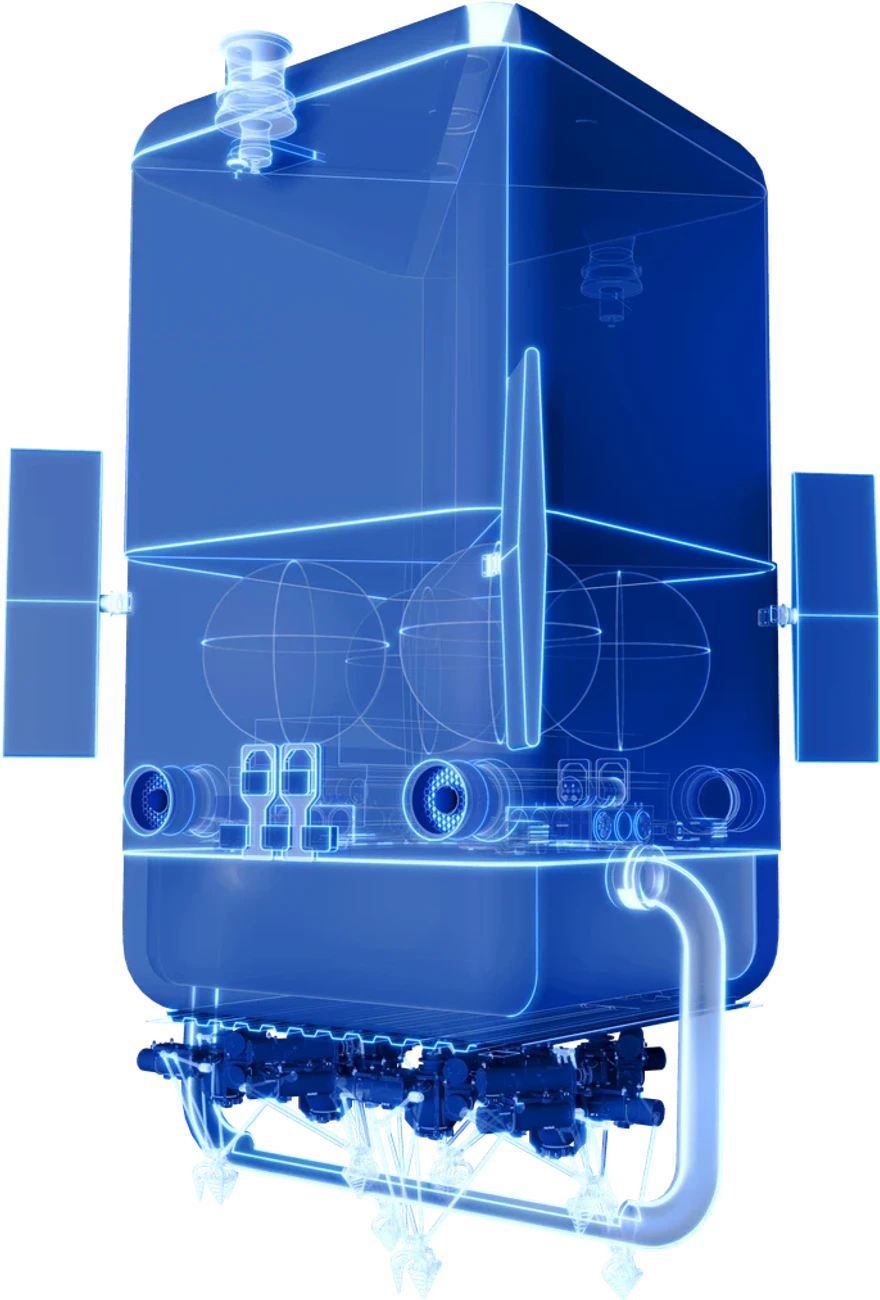 Concept visualization
01Architecture
Six capabilities.
One system.
Each capability makes the next one possible. Seeing individual nodules makes choosing possible. Choosing makes discrete robotic collection possible. Discrete collection frees the vehicle from a riser, so buoyancy can do the lifting — and independent vehicles can be multiplied.
Machine perception
Machine perception surveys the collection area. Visibility, the surrounding scene and the target material are all part of how it’s evaluated.
02Buoyancy
An elevator in
the water column.
Eureka doesn’t pump its payload up kilometres of pipe. The ocean does the lifting.
Water pushes up on anything in it with a force equal to the weight of the water it displaces. When Eureka weighs more than the water it displaces, it sinks to the seafloor. When it weighs less — positively buoyant — it rises with its payload, without continuous pumping up a riser.
Balanced to hold position
Illustrative principle / Motion is not to scale03The operating cycle
From descent
to reset.
Eight stages connect the vehicle to the people and systems on the vessel. Recovery and reset are part of the cycle, not an afterthought.
Stage 01
Descend to the operating area.
Concept visualization / Not to scale04Inside Eureka
See how it
comes together.
Our breakdown animation takes Eureka apart system by system, so you can see how each part fits.
05Fleet
Concept visualization / Illustrative fleetCapacity is a choice
of fleet size.
Start at a modest scale, then add vehicles and vessel capacity as confidence and demand build, without redesigning the system. Because each vehicle works independently, one can rotate out for servicing while the rest keep working.
Maintenance, coordination and availability will be evaluated across the whole operation, not one vehicle at a time.
06Measurement
Evidence drives
development.
Each stage is tested for what it can do and what effect it has, under defined conditions.
Environmental assessment sits alongside engineering performance, with methods, limitations and open questions stated plainly.
Start a conversation